
Dutch version below | Podcast itself it only available in Dutch because OOG is a Dutch radio station
How do we ensure we use less fossil fuels but can still enjoy the ease of use of plastic? Should new plastics be biobased and biodegradable to become more durable? Actually, what is the difference?
Together with the company AVEBE chemist Laura Boetje produces biobased plastics by using starch from potatoes. How she does it is something you’ll learn during the broadcast on June 15th, because Laura will come to the studio to tell us something about her research in the lab. Will you be listening too?
It’s already been over twee weeks since the broadcast, but this is the piece of information for social media that fellow student Feeke wrote for her broadcast as guest presenter at radio program OOG op wetenschap.
For the third assignment of the course Science Communication and Journalism, Feeke and I were supposed to make two scripts for an interview with a scientist for radio program OOG op wetenschap. We also got the opportunity to conduct the interview ourselves, live on the radio. Well, we weren’t going to turn that down.
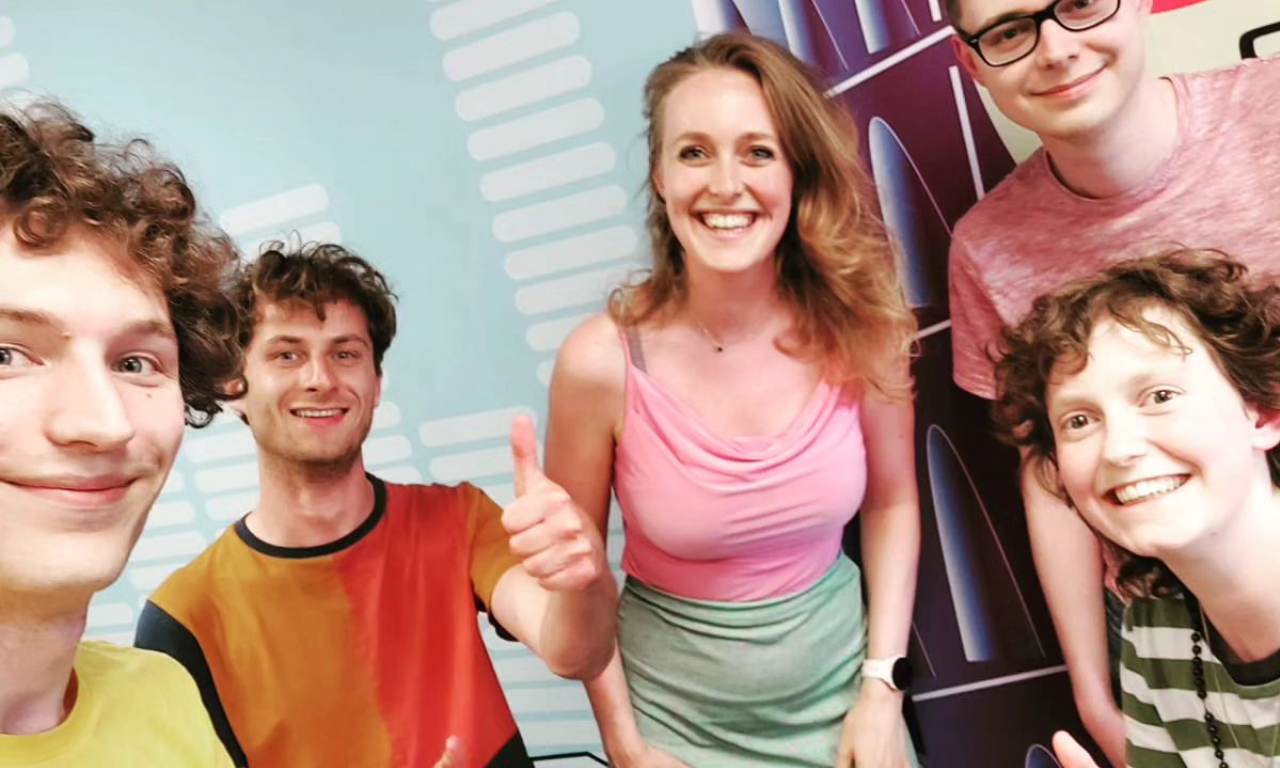
That’s how we ended up in the radio studio on June 15th at 7 pm, surrounded by buttons, sliders, headphones and sound equipment more expensive than our tuition.
Feeke interviewed Laura boetje during the broadcast using our script, Laura is a chemist at the RUG who works on creating plastics from potatoes. You can find out how the interview went below by listening to the podcast of the radio program on Spotify. Though sadly it is only available in Dutch.
Do you want to know more about creating and improving a script for the radio? I will be covering that topic in the next post about OOG on Bridging Science. In that post I’ll tell you everything about my personal experience with writing a script for the radio for the broadcast on June 29th.
Hoe zorgen we dat we minder fossiele grondstoffen gebruiken, maar nog wel kunnen genieten van de handigheid van plastic? Moeten nieuwe plastics biobased én biologisch afbreekbaar zijn om duurzamer te worden? Wat is eigenlijk het verschil?
Samen met het bedrijf AVEBE maakt scheikundige Laura Boetje biobased plastics en gebruikt daarvoor zetmeel uit aardappelen. Hoe ze dat doet, kom je te weten tijdens de uitzending van 15 juni, want dan komt Laura ons vertellen over haar onderzoek in het lab. Luister jij ook mee?
Het is intussen alweer meer dan twee weken geleden, maar dit is het stukje tekst voor sociale media wat medestudent Feeke heeft geschreven voor haar aflevering als gastpresentator bij radio programma OOG op wetenschap.
Voor de derde opdracht van het vak Science Communication and Journalism hadden Feeke en ik de opdracht om een tweetal scripts te maken voor een interview met een wetenschapper voor radio programma OOG op wetenschap. Ook kregen wij de optie dit interview zelf uit te voeren, live op de radio. Nou, daar zeiden wij natuurlijk geen nee tegen.
Vandaar ook dat wij op 15 juni om 7 uur ‘s avonds in de radio studio stonden, omringt door knopjes, schuifjes, koptelefoons en geluidsapparatuur die duurder is dan ons collegegeld.
Feeke heeft in die uitzending een interview gehad met Laura Boetje, scheikundige aan de RUG die zich bezig houdt met het maken van plastic uit aardappelen, aan de hand van ons script. Hoe dat interview precies is gegaan? Dat kun je hieronder uitvinden door de podcast van het radio programma op Spotify te luisteren.
Mocht je na één aflevering de smaak te pakken hebben en meer willen horen, dan zijn er gelukkig nog 10 andere afleveringen om naar te luisteren.
Wil je nou meer weten over het maken en verbeteren van zo’n script? Daarover lees je meer in de volgende post over OOG op Bridging Science, daar vertel ik je alles over mijn persoonlijke ervaring met het schrijven van een script voor de radio voor de aflevering van 29 juni.
Voor nu, veel luisterplezier!
 Bridging Science