
By Cristina Pop
If there is one key takeaway from the Student Science Communication Conference in Leiden, it is the power of storytelling in communicating science. But what is the most compelling way to tell a story?
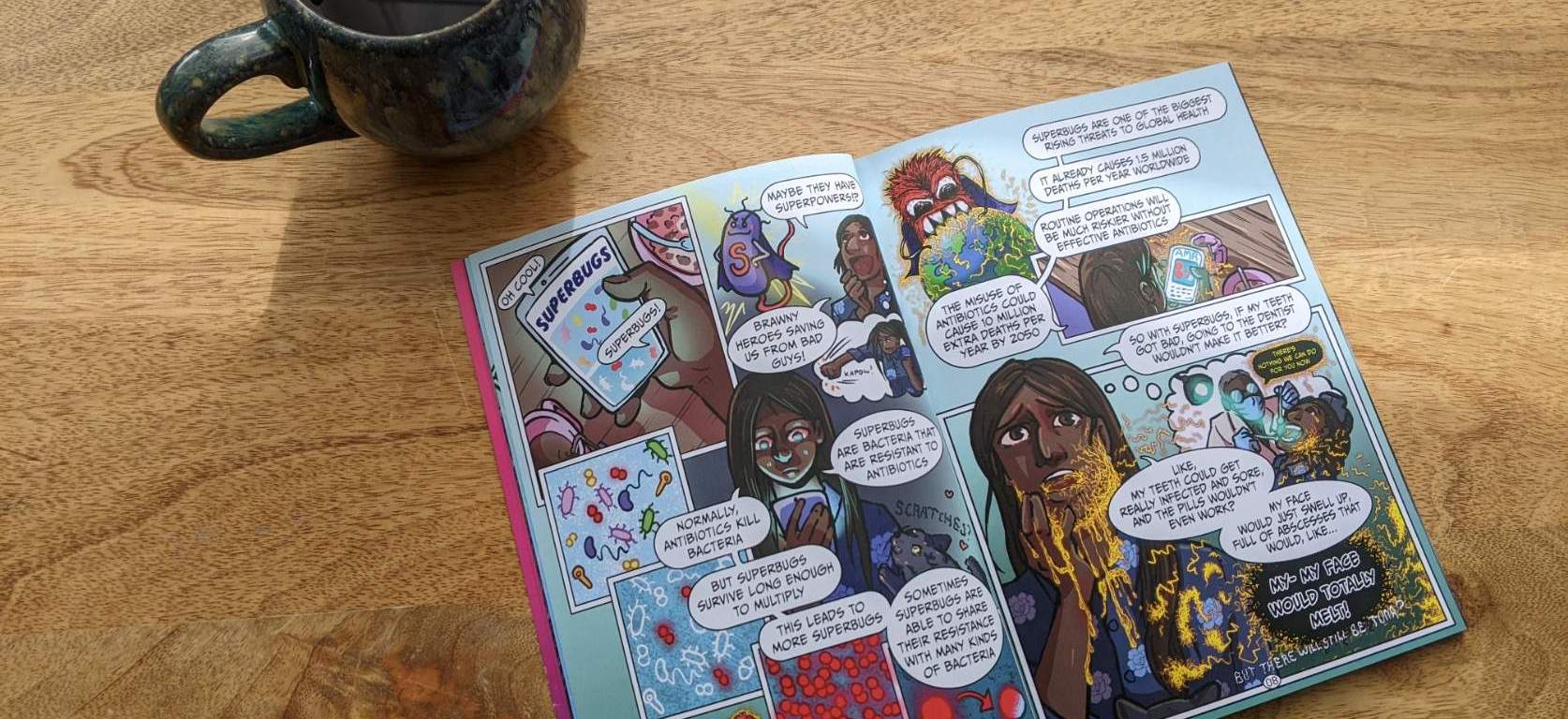
According to Lizah van der Aart, what truly brings a story to life are images. This was the focus of their Graphic Design workshop, where we explored how to communicate scientific stories through illustrations, comics, and animations.

Lizah is an illustrator and animator who creates a variety of visual content, including editorial science illustrations and science comics. However, their main job is creating animations for the Minute Earth YouTube channel. In the first part of the workshop, Lizah gave us a behind-the-scenes look at the principles of science communication that the Minute Earth team uses to create engaging and educational videos.
To start with, understanding your audience is fundamental. What do they already know? How old are they, and what are their interests and values? Tailoring your content to suit your audience forms the bedrock of effective communication.
Once you have established this, the key is storytelling. It is crucial to understand that a topic alone is not a story. Stories engage audiences by taking them on a journey filled with tension and anticipation.
Next on the list: embrace complexity! Many scientific topics are intricate and can’t be fully explored in short videos. Simplifying too much risks losing crucial nuances and conveying inaccurate messages. Additionally, some scientific questions don’t have clear-cut answers. As science communicators, it is important to honestly convey shortcomings and explain the scientific process that led to current knowledge. When necessary, a simple “we don’t know yet” also works.
Another critical element for ensuring the highest quality of your work is understanding your weaknesses. When in doubt, don’t hesitate to reach out to experts. Listen to feedback and criticism, and take responsibility for any mistakes you make.
Finally, at the heart of Minute Earth’s mission is changing how people think about the world. Even when focusing on niche topics, it’s important to show their broader implications and connections to larger themes.
With all the theory in mind, it was our time to apply what we’ve learned. In the workshop’s second part, Lizah guided us step by step as we created our own short comic story.
Comics work well for storytelling, particularly in explaining scientific topics, and Lizah highlighted several advantages of using them. The combination of text and images helps the reader retain information by engaging multiple senses. By using simple, conversational language, comics are accessible to a broad audience, regardless of their prior knowledge. But most importantly, comics narrate stories through characters, and whether the character is a person, a bacteria or a dinosaur, the reader can form a meaningful connection and empathise with them.
If you want to give it a try and practice making a comic, here is a basic formula.
Start with a piece of paper divided into six panels.
1. The Hero: In the first panel, introduce your main character in their natural environment. It can be anything that you wish – a person, an object, a plant, anything goes.
2. The Danger: Panel two should depict the danger or problem that sets the story in motion.
3. The Mentor: In panel three, introduce a helper—a mentor, friend, or guide—who shows up to aid the hero through the challenge.
4. Training Montage: Moving to panel four, show the hero undergoing training or preparation to become better and face the obstacle.
5. Facing the Challenge: In the following panel, depict the hero putting his training into practice and overcoming the challenge.
6. Resolution: Finally, panel six concludes with the hero achieving victory and enjoying the moment.
Voilà! Your comic is complete — don’t forget to give it a name.

One final piece of advice from Lizah to anyone who aspires to become a science communicator: just go for it. Push past the imposter syndrome and put yourself out there. Tell people about your work, skills, and expertise. Share with others how you can assist them, and you might find people eager to accept your help.
 Bridging Science