
By Cecile Bruil
Last Friday night was the annual European Researchers’ Night at Forum, and like any science communication student, I was eager to join this science festival. If you unfortunately were not able to attend, you could live vicariously through my report of the evening 😉

Upon entering the Forum, I was welcomed with live music from the band ‘BEAT plastic waste’, immediately filling the entire building with an exciting and welcoming atmosphere. A wristband was placed around my wrist and an autumnal themed drink together with the programme folder was handed to me by the Forum staff. From there on I was free to explore this festival.
Starting at 19:30 the ground and second floor were filled with an overwhelming amount of interesting, innovative and interactive research stands, showcased with immense passion from the people involved. Among the many research displays, a few stood out to me: there was a stand about people making beautiful flowers out of plastic waste, communicating science (and potentially saving people’s lives) through the use of comics, and an interactive table where you could design the museum of the future, among many others.

But in all honesty, I let myself have very little time to explore the stands. I was planning to visit as many programmed workshops and talks as I could, having one goal in mind: to learn at least one fun fact this evening, and have fun. So, maybe I had two goals.
The first workshop I participated in was from Andrew Greenwood, a British researcher developing prescription dances to people with dementia, MS, or Parkinson’s. His therapy is based on the activation of both brain hemispheres simultaneously through dance. Instead of only telling us this, the participants were all asked to take part in an actual session. We were all given a silent disco headset, both playing soothing music with a rhythm, as well as Andrew’s voice guiding us through the workshop. So we started dancing, from small fast movements with only our fingertips, to large slow movements using our entire body to ‘push away all the air’. we were activating our brain and body in ways that I have not experienced before. After thirty minutes of eclectic dancing, my mind felt cleansed, as if all the excess waste from my brain was cleared away, simply by deliberately activating certain muscles on the rhythm of the music. This experience was one I did not expect to like as much as I did, and the fact that research has shown this to be beneficial for neurodegenerative disease patients filled my heart even more.

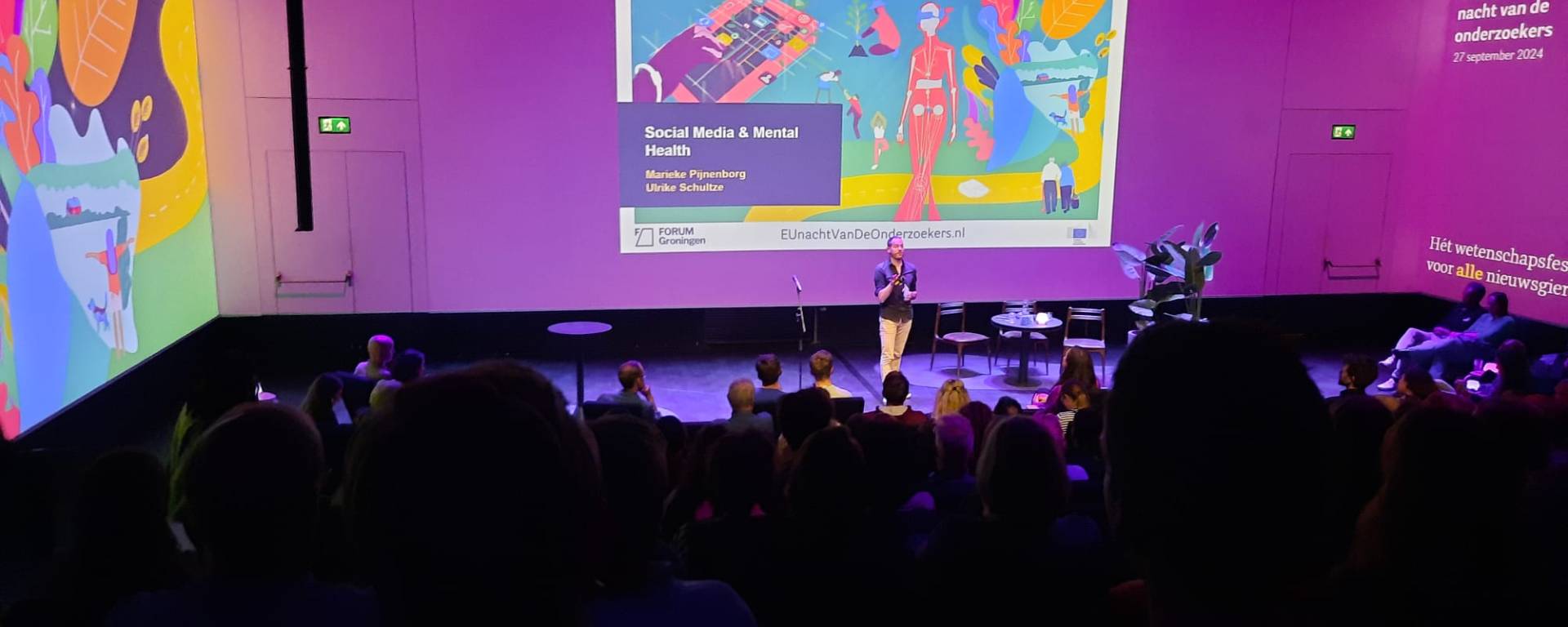
Still filled with endorphins from the last workshop, I scoured my programme to find the next one – a talk about healthcare and the future. Here we had a discussion with the small audience about the effect of aging citizens on society as a whole and the pressure it will put on the healthcare system in 2050. This was followed by a talk show in the Rabo Studio, where two researchers were interviewed about the effect of social media on mental health, particularly in children. In addition to the interesting points the researchers made, the talk show was accompanied by a beautiful live song performance by Leonie Tiemessen.
By this point it was already 22.45, and the last round of workshops was about to start. The final workshop I chose to attend was from Allard Roest giving us a guide on how to make your home weatherproof – by not just focusing on the effect of climate change, but by focusing on how we can adapt to deal with it effectively. For example, creating as much shadow as possible, having soil or gravel for the rainwater to move to, or, by simply painting your house white to reflect sunlight (however, make sure your landlord is okay with this before you buy paint), are just a few ways to cope with the effects of climate change.
After the workshop I roamed around the few research stands that were still up. It was slowly approaching midnight, and I could start to reflect on an evening that passed by in the blink of an eye. The atmosphere was amazing the whole time, and the visitors of all ages seemed to have enjoyed their time just like I did, and hopefully they learned something new.
Which brings me to my goals, to learn at least one fun fact and enjoy the event! I certainly enjoyed this festival a lot and highly recommend people to visit next year! Did you know that in the UK dancing is actually prescribed by doctors to their patients? Or that only 4% of children and young adults are addicted to social media? Or that Zuiderdiep used to be a canal? Now you do 😉
 Bridging Science