
by Cristina Pop
When we, students from the SEC master’s programme, complete our studies, some of us will choose to step into the field and practice science communication and education, while others may opt to remain in academia and contribute to research on science communication. This balance between research and practice sounds ideal in theory – researchers explore best practices, while practitioners apply these insights to improve their work. However, in reality, this connection is not always seamless.
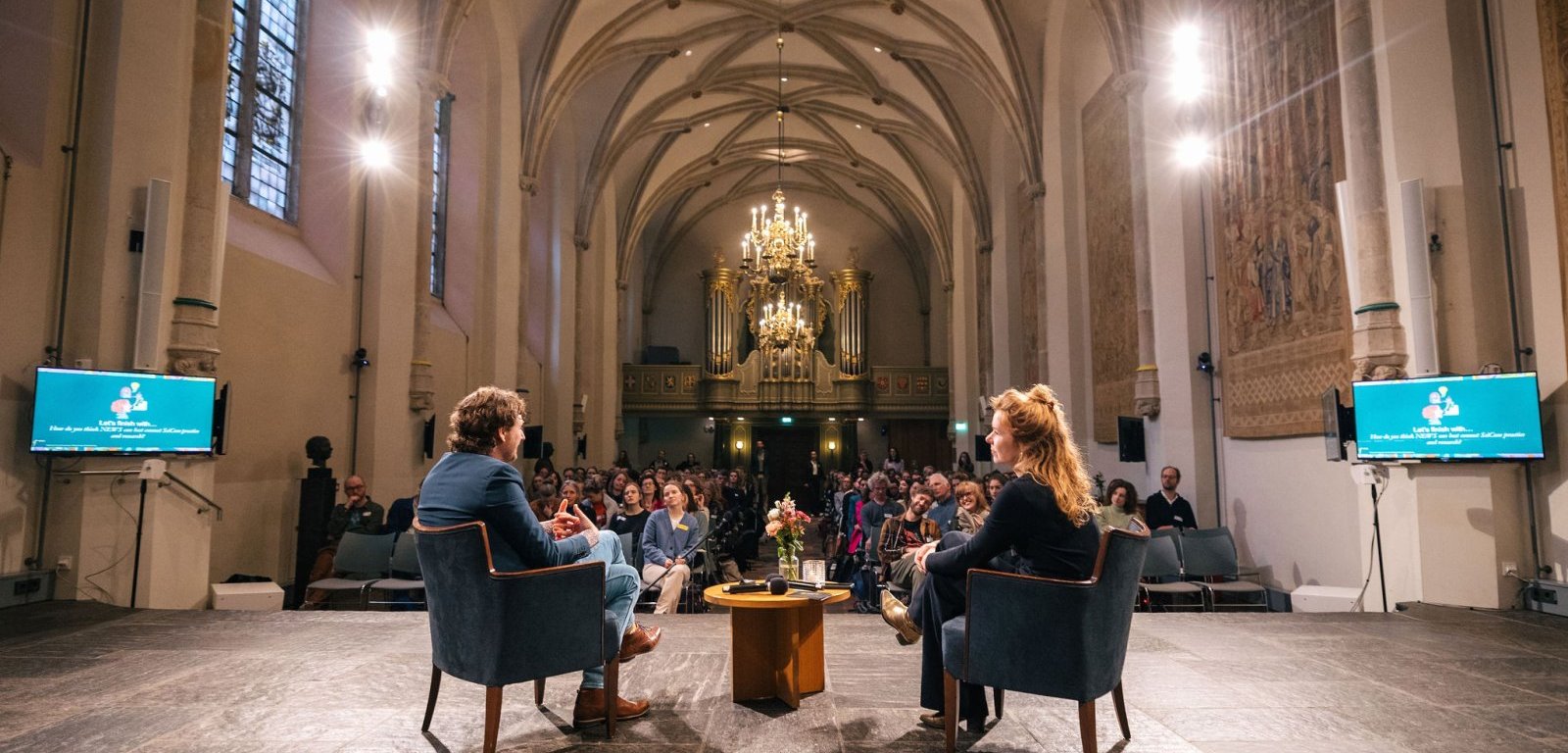
One event that shed light on this dynamic is Wetenschnapps, an annual conference organized by Utrecht University. As its name playfully suggests – combining the Dutch word for science, “wetenschap,” with “schnapps,” a beverage often enjoyed in small shots – the conference offers participants valuable insights into different facets of science communication.
The gap between science communication and research
This year’s theme, “Tension or symbiosis: science communication in theory and practice,” was my first introduction to the divide between those who actively communicate science and those who research how it should be done. As a student, this gap was not particularly evident to me. In an academic setting, we are taught both theory and its application, creating an integrated experience. However, during this conference, I discovered that for professionals and researchers, the situation is quite different.
Science communication practitioners often rely on their experience and instincts. As Professor Erik van Sebille pointed out in his opening speech: “It’s surprising that every step of the academic workflow has a protocol, except science communication. Academics have codified the way we set up hypotheses, search the literature, conduct and analyze experiments and write, review and publish manuscripts. But when we then want to communicate about our work, we do that mostly based on intuition and experience.”
On the other side we have science communication researchers, who may not always engage with practitioners as much as would be beneficial. The theory-practice gap can emerge when research findings are not easily accessible, whether due to paywalls, difficulty in navigating the literature, or differences in research methodologies between social and natural sciences. These barriers can make it challenging for practitioners to apply the latest research effectively.
Bridging the gap
This year’s Wetenschnapps edition aimed to address this divide by bringing together professionals and researchers to explore how each group can contribute to the other’s work. What insights can communication professionals offer researchers to ensure that their studies address relevant, real-world challenges? How can science communication research contribute to better, more evidence-based practices?
One particularly insightful workshop was “Learn to fish in science communication literature” by Nieske Vergunst. In this session, we learned how to find the right literature, and how to read and interpret it – an approach she compared to cleaning and preparing fish – in order to be able to use the theory in practice.
Resources for better science communication
For those who want to stay informed and bridge the gap between research and practice, here are some valuable resources shared during this workshop.
The SciCommer – A newsletter for both researchers and practitioners, offering global updates on science communication.
SciCommBites – A blog that summarizes science communication research. It facilitates the connection between practice and research and makes it easier for everyone who wants to communicate science to do it in an informed and up-to-date way.
Animate Your Science – This blog is full of useful information and resources, from insights and guides for effective science communication, to posters and CV templates.
BlueSky Starter Packs – This is a collection of recommended science communication experts to follow on BlueSky, a decentralized social media platform.
Academic Journals – For in-depth research, journals such as The Journal of Science Communication, Public Understanding of Science and Research for All, provide valuable studies on the field.
These are just some of the resources I chose to share with you. For a full list, you can check out the handout prepared by Nieske Vergunst. Additionally, if you are curious about the other workshops at Wetenschnapps, the conference team has prepared a nice overview, available here.
Looking ahead
Whether you plan to pursue a career in academia or hands-on science communication, it is crucial to stay informed about developments on both sides. Collaboration between theory and practice leads to more effective science communication and education. I found this conference insightful, and I hope the resources and ideas I have shared will be useful to you as well. And who knows, maybe we will meet at the next Wetenschnapps event to continue learning how to make science communication more impactful!
 Bridging Science