
This article was written for the course History and Philosophy of Science 2024.
The Contributions of Alchemy to Modern Pharmaceutical Science
by Vera Huitema
Introduction
Most people associate alchemists with medieval magicians or charlatans. According to popular belief, these characters are either obsessed with turning metals into gold or creating elixirs of immortality, much like Harry Potter’s Philosopher’s Stone. However, these widely held misconceptions underestimate the complexity and influence of alchemy. Alchemists used a practical approach that closely mirrors modern empirical scientific methods. As a consequence, alchemy’s significance in the history of science and its influence on the development of many scientific disciplines is recognized more and more (Holmyard, 1957, Chapter 1; Principe, 2013, Chapter 1). Among the many scientific disciplines that have developed under the influence of alchemy, my area of interest is pharmaceutical science. Therefore, this essay will explore how alchemy contributed to the development of pharmaceutical science.
To this end, we will first examine the dawn of alchemy in terms of its founding principles and philosophical underpinnings. We progress towards the history of alchemy in the Arabic world, which will provide insight into how medicinal alchemy developed in Latin Europe. Subsequently, a case study of alchemist and physician Paracelsus will be used to illustrate the advancements of medicinal alchemy during the early modern period. This historical and philosophical context will clarify how alchemical methods and beliefs have influenced modern pharmaceutical science.
Given the extensive history of alchemy, it is impossible to provide the complete historical and philosophical context within this essay. Therefore, this essay will focus on the most important developments and key figures in alchemy. Additionally, alchemy’s influence on modern pharmaceutical science will be discussed until the early modern period1, as during subsequent periods, a clearer distinction between alchemy and chemistry was established, reducing the direct influence of alchemy (Principe, 2013, Chapter 4). Lastly, the controversy and the mystical and esoteric aspects2 of alchemy are beyond the scope of this essay, as there are too many historical, religious, and philosophical aspects involved, to cover this adequately within this essay.
The origin of alchemy: Greco-Egyptian Alchemy
The history of Western Alchemy is often divided into three chronological periods: the Greco-Egyptian, the Arabic, and the Latin European period (Bensaude-Vincent et al., 1996; Holmyard, 1957; Principe, 2013)3. The Greco-Egyptian period spans the third to the ninth century, centred in Hellenist Egypt, particularly in the city of Alexandria. It is believed that alchemy emerged here through the fusion of Greek natural philosophy and Egyptian artisanal techniques4 (Holmyard, 1957; Principe, 2013; Read, 1936).
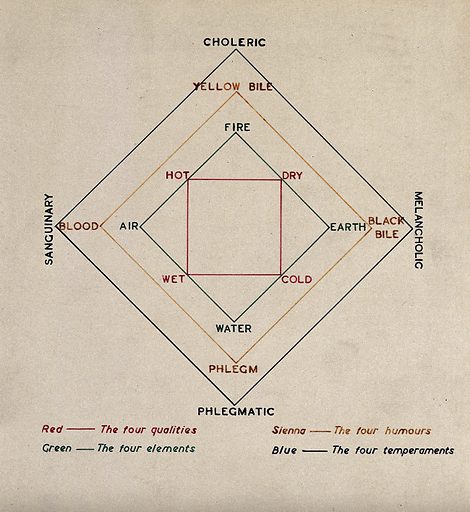
During this period, many Greek philosophers studied the nature of matter and various philosophical schools coexisted (Bensaude-Vincent et al., 1996, p.13; Principe, 2013, p.16)5. To understand the main goal of alchemy, we shall look at Aristotle’s (384-322 BC) theory of the formation of matter, which expanded upon Empedocles’ (ca. 490-430 BC) earlier theory on the origin of matter (Aristotle & Lee, 1952, Book I; Empedocles & Wright, 1981, Chapter 2)6. According to Aristotle, all matter could be described by four primary qualities: hot, dry, wet, and cold. These qualities could be combined in pairs to form the four elements: fire, earth, water, and air (Figure 1). Furthermore, Aristotle believed that by changing the proportions of the qualities, the four elements could transmute into one another. For instance, fire can transmute into air by applying the quality hot (see Figure 1) (Aristotle & Lee, 1952, Book I).

Aristotle extended this theory, proposing that all matter is composed of the four elements, and differences between types of matter are due to varying proportions of these elements. Thus, just as elements can transform into one another, so too can matter transform by adding or subtracting elements to achieve the correct proportions (Holmyard, 1957, Chapter 1; Principe, 2013, pp. 37-44; Read, 1936)7. While natural philosophers like Aristotle focused mainly on theories, the Greco-Egyptian period saw a combination of philosophical knowledge and the practical expertise of artisans, leading to the rise of alchemy (Bensaude-Vincent et al., 1996; Principe, 2013, pp. 13-14). The beginning alchemists thereby used Aristotle’s theory on the formation of matter as the grounding principle for the transmutation of metals, the primary goal of the earliest alchemists. In other words, they used Aristotle’s theory as proof that it was possible to change metals into gold.
The first reliable writings on alchemy are attributed to Zosimos of Panopolis (ca. 350-420 AD) (Holmyard, 1957, pp. 23-30; Principe, 2013, pp. 15-24)8. His works demonstrate how alchemists incorporated both theories and experiments. He described several methods and apparatuses in his work, including distillation and filtration (Holmyard, 1957, pp. 23-30; Principe, 2013, pp. 15-24)9. His practical experiments were guided by theories and the obtained observations were used to support or change those theories (Holmyard, 1957, pp.23-30; Principe, 2013, p. 16). This provides the first signs of how alchemy used an empirical method, similar to the approaches in modern scientific practices.
Islamic Alchemy
Alchemy advanced further in the Arabic world between approximately 750 and 1400 AD. The Arabs were introduced to Greek culture and ideas when they invaded Alexandria and other Eastern Mediterranean lands in 640 AD. As a result, many Greek writings, including those by Aristotle, Plato, Euclid, Galen, and Hippocrates, were translated into Arabic. This marked the beginning of significant developments in alchemy (Principe, 2013, pp. 28-29).
A key figure in Islamic alchemy was Jãbir ibn-Hayyãn (ca. 721-815 AD) (Bensaude-Vincent et al., 1996; Read, 1936). He is credited for writing more than three thousand works that include a systematic chemical classification of substances and many practical descriptions of equipment and experiments (Principe, 2013, pp. 33-35). Interestingly, there is an unresolved debate among researchers about whether Jãbir ibn-Hayyãn was a single individual, multiple persons, or a pseudonym under which many alchemists published their work (Principe, 2013, pp. 33-35). However, within this essay, it will be assumed that Jãbir ibn-Hayyãn did concern a person10.
Jãbir’s primary focus was on the Mercury-Sulfur theory. According to this theory, Sulfur and Mercury are the two principles that make up all metals and minerals11. The foundation of this theory was established by Aristotle, who expanded his four-element theory to describe how metals and minerals were formed. To this end, Aristotle proposed that two exhalations originated from the interior of the earth, each combining two of the four qualities: one hot and smoky, the other moist and steamy. Together, these exhalations were responsible for the formation of metals and minerals (Figure 2) (Aristotle & Lee, 1952, Book III). Jãbir extended this theory by suggesting that these exhalations created the intermediate principles of sulfur and mercury inside the interior of the earth. Subsequently, metals and minerals were formed by a combination of sulfur and mercury (Figure 2). The proportion of the two principles determined the type of metal or mineral that formed (Holmyard, 1957, pp. 72-73; Principe, 2013, pp. 33-35; Read, 1936, pp. 17-19).

Building on this theory, Jãbir theorized that achieving the perfect proportions of these two principles could produce gold. If other ratios were mixed, other baser12 metals would result (Bensaude-Vincent et al., 1996; Holmyard, 1957, pp. 72-73; Principe, 2013, pp. 33-35). Unlike Aristotle, who viewed the four elements as abstract principles, Jãbir considered them concrete substances. He believed it was possible to extract single-quality bearing substances from these elements using techniques such as distillation (Principe, 2013, pp.33-35; Read, 1936, pp. 17-19).
This hypothesis was rooted in Greek medicine, particularly Hippocratic medicine, further developed by the physician Galen of Pergamon (129-199 AD). According to his theory, the human body consists of four humors: yellow bile, black bile, blood, and phlegm. These humors were linked to Aristotle’s four qualities (Figure 3). The body was considered healthy when these qualities were in balance. Thus, if someone was sick, the physician had to determine which humor was out of balance to restore harmony (Principe, 2013, pp. 37-39). Similarly, Jãbir saw the transmutation of metals: by supplying the exact amounts of the four isolated qualities, it would be possible to make gold (Principe, 2013, pp. 37-39; Read, 1936, pp.17-19). Thus, Jãbir used the Mercury-Sulfur theory as a theoretical framework for practical experiments, integrating Aristotelian and Galenist thoughts and theories.
To this end, a large set of practical experiments were conducted, resulting in an extensive corpus of work describing reactions, methods, and preparations (Principe, 2013, pp. 40-43). Although, with modern knowledge, the theoretical framework was flawed, his approach to studying alchemy mirrored scientific fields today. He used a theoretical framework to base practical designs on, thereby expanding knowledge13.

Latin European Alchemy in the Medieval Period
In 1144 AD, alchemy reached Latin Europe through the first translation of the Arabic alchemical work De compositione alchemiae by Robert of Chester. During the twelfth century, several other translations followed, marking the beginning of alchemy’s further development as a discipline in Europe. During this time, alchemy gained popularity14, building on the key concepts from Islamic alchemy (Principe, 2013, Chapter 3).
Where Jãbir ibn-Hayyãn had demonstrated the integration of theoretical frameworks with practical experiments, Western alchemists placed even greater emphasis on experimental findings to support their theories (Debus, 1978, Chapter 2; Principe, 2013, Chapter 4)15. To this end, these alchemists conducted various experiments to describe and categorize substances based on their chemical and physical properties. Thereby Western alchemists unified theory and observation, further laying the foundation for modern scientific practices (Principe, 2013, pp. 51-62). As a consequence of the increased emphasis on experimental findings, many innovations were made regarding experimental techniques and apparatus, during this time. In addition, by having better-equipped laboratories, new reagents were introduced enabling new experiments to be performed (Debus, 1978, Chapter 2; Principe, 2013, Chapter 4).
Another key development during the thirteenth and fourteenth centuries is the connection between alchemy and medicine. One of the influential advocates for this connection was Roger Bacon (1214-1293 AD). By interpreting alchemy as medicine for metals, he deduced that alchemical principles could also serve as medicine for the human body (Moureau, 2017). Many other alchemists followed his beliefs, leading to the fast development of a large body of works describing methods and apparatus for the development of oils and spirits with healing purposes (Debus, 1977, pp. 19-25).
This newly developed field of medicinal alchemy still followed the Aristotelian and Galenist views, thereby co-existing peacefully with the physicians and natural philosophers of that time. However, this changed during the early modern period, especially by one specific man: Theophrastus Bombastus von Hohenheim (1493-1541 AD), also known as Paracelsus, who introduced a new philosophy of medicine (Debus, 1978, pp. 16-19).
Latin European Alchemy during the early modern period – through the insights of Paracelsus
While many alchemists contributed to medicinal alchemy during the early modern period (1500-1700 AD), their findings were all overshadowed by Paracelsus and his drastic change in view on the chemical philosophy (Debus, 1977, pp. 45-61; Principe, 2013, 127-131). Therefore, his insights will be used to examine alchemy’s influence on modern pharmaceutical science during the early modern period16.
Paracelsus was already exposed to alchemy and medicine early on by his father. His education started as an apprentice of an alchemist studying in the mines in Villach17. At age fourteen, he began traveling throughout Europe, attending different universities, and graduating from the University of Ferrara with a medical degree. During his career as a physician, Paracelsus publicly criticized academia for its strict commitment to ancient writings and disregard for empirical observations. This earned Paracelsus a bad reputation and often discontinued positions at universities (Debus, 1977, pp.45-61; Principe, 2013, pp. 127-131; Stillman, 1919).
Paracelsus rejected the Aristotelian and Galenist thought used by universities, deeming it incompatible with Christianity. He particularly criticized its reliance on logical and geometrical methods, which he felt lacked a spiritual dimension. Furthermore, he opposed early modern physicians’ practice of solely relying on ancient texts without conducting their own experiments. In contrast, Paracelsus believed that true philosophy and the system of nature should be based on divine revelation and empirical observations. Thereby, his philosophy was significantly influenced by Neoplatonic and Hermetic thought, which were prevalent during the early modern period (Debus, 1977. pp. 45-61; Principe, 2013, pp. 127-131; Stillman, 1919)18.
The new chemical philosophy of Paracelsus did incorporate some Aristotelian thoughts, albeit modified to fit within his views. According to Paracelsus, the four elements were spiritual principles, originating from God’s creation through a process of separation. These elements were initially unified in a primary substance, and through divine intervention, they were separated into distinct elements that make up all matter (Debus, 1977, pp. 51-60; Vries, 2021)19.
Additionally, Paracelsus introduced a second elementary system: the Tria Prima. The Tria Prima consisted of the three principles: salt, sulfur, and mercury. This theory extended the Mercury-Sulfur theory to account for all matter, not only minerals and metals (Debus, 1977, Chapter 2). To prove this system Paracelsus gave the example of a burning twig (1894, p.150)20: “For that which smokes and evaporates over the fire is Mercury; what flames and is burnt is Sulphur; and all ash is Salt”.
Using these core concepts of his chemical philosophy, he developed a new theory on the origin and treatment of diseases, rejecting the Galenist theory of diseases. Paracelsus believed that diseases originated from external agents, which entered the body through air, food, or drink and subsequently went to a specific place in the body, where they caused harm. These external agents could be attributed to one of the three principles and were thus chemical in nature. Therefore, diseases should be treated with chemical medicines (Debus, 1977, pp. 96-109; Holmyard, 1957, Chapter 8; Stillman, 1919; Vries, 2021).
His theory of chemical medicine was based on the knowledge of earlier alchemists on the separation of compounds to reach pure essence, consisting of the right proportions of the three principles. Using distillation, Paracelsus sought to separate the pure, medicinal qualities of a substance from its toxic components. He believed that by refining substances to their purest forms, alchemists could harness their healing properties more effectively (Debus, 1978, Chapter 2; Holmyard, 1957; Stillman, 1919). We can compare this approach to modern pharmaceuticals, which use only pure medicinal preparations to ensure the most effective treatment.
Another contribution of Paracelsus to pharmaceutical science was his emphasis on the importance of dosage. He famously stated, “What is there that is not poison? All things are poison and nothing is without poison. Solely the dose determines that a thing is not a poison” (Deichmann et al., 1986; Paracelsus, 2003, p. 63)21. This principle highlighted that any substance could be toxic or beneficial depending on the amount used. Paracelsus’ work in distillation and separation reinforced this idea, as he aimed to isolate the active, beneficial components of substances and determine the appropriate dosages for their use in medicine (Deichmann et al., 1986; Martelli, 2014). His approach laid the groundwork for modern pharmacology, where the safety of drugs is closely linked to their dosage.
Thus, Paracelsus’ integration of the principle of separation, the Tria Prima, and the alchemical techniques into his medical practices represented a significant transition from traditional medicine to the application of chemistry in medical theories22. By focusing on empirical observation and experimentation, he paved the way for a new understanding of disease and treatment, emphasizing the chemical nature of medicine. Moreover, Paracelsus’ focus on purity and dosage closely aligns with the efficacy and safety of drugs in modern pharmaceutical science.
Conclusion
To summarize, alchemy has had a major impact on the development of modern pharmaceutical science. Greek philosophy and Egyptian artisanship merged to form alchemy, marking the emergence of an empirical science that utilized theories to guide experiments. Throughout the Islamic period, alchemy evolved further, as shown through the works of Jãbir ibn-Hayyãn, who, like modern scientists, used a thorough theoretical framework to direct his experiments.
Upon the introduction of alchemy to the Latin European period, alchemy developed further, leading to the development of medicinal alchemy and the creation of more advanced laboratories. During the early modern period, as illustrated through the insights of Paracelsus, more emphasis was laid on observation and experimentation. This led to the rejection of ancient theories and a new understanding of disease and subsequent treatment.
The Latin European period built on this practice, leading to the development of medicinal alchemy and the establishment of better-equipped laboratories during the Medieval period. The early modern period, illustrated by the works of Paracelsus, emphasized empirical observation and experimentation, rejecting ancient theories and promoting a new understanding of disease and treatment. Paracelsus’s focus on the purity and dosage of chemical medicines laid the groundwork for modern pharmaceutical science, drawing parallels with the efficacy and safety of drugs in modern pharmaceutical science. These new insights of Paracelsus marked the beginning of modern pharmaceutical science, leading to many subsequent developments that have shaped the field as we know it today.
In conclusion, while alchemy’s direct influence has ceased, its contributions can still be recognized within modern pharmaceutical science. Understanding this historical influence is of importance, as it helps us to appreciate the developments of scientific thoughts and demonstrates how something seemingly unscientific can have a profound impact on future scientific advancements.
Footnotes
- 1. During the early modern period also the scientific revolution took place. However, to remain in scope, the broader historical context and influence of the Scientific Revolution will not be discussed. This will allow a more focused discussion of the direct contributions of alchemy to the field of pharmaceutical science without being overshadowed by the larger scientific paradigm shift.
- 2. There is a distinction between esoteric and exoteric alchemy. The esoteric aspect focuses on the spiritual and mystical elements, while the exoteric aspect deals with practical applications, such as the transmutation of metals. This paper will primarily focus on exoteric alchemy, but to fully understand the historical context, it is essential to keep in mind the interplay between both aspects (Holmyard, 1957, Chapter 1). A clear example is given by Allen G. Debus (1978, p.11): “To point to the mathematical laws governing planetary motion formulated by Kepler or the mathematical description of motion presented by Galileo, these were basic milestones in the development of modern science. But it should not be forgotten that Kepler sought to fit the orbits of the planets within a scheme based upon the regular solids, and Galileo never relaxed his adherence to circular motion for the planets. Both authors reached conclusions strongly influenced by their belief in the perfection of the heavens. Today we would call the first examples ‘scientific,’ the second not. But to force our distinction upon the seventeenth century is ahistorical“.
- 3. There are diverse opinions on the origins of alchemy. Some researchers postulate that Chinese alchemy predates the Greco-Egyptian counterpart. The ideas from Chinese alchemy bear a striking resemblance to Western alchemy, suggesting that these forms of alchemy did not evolve in isolation. Therefore, Chinese alchemy may have influenced the development of Western alchemy. While this debate is intriguing, it falls outside the scope of this essay. Therefore, Alexandria and the Greco-Egyptian period are chosen as the starting points for this essay due to their well-documented contributions to the foundation of alchemical practices (Read, 1936, Chapter 1).
- 4. During the Greco-Egyptian period, several techniques were already developed, including metallurgy (e.g., fusing and mixing metals, or separating silver from gold), the development of dyes and cosmetics, ceramic and glass making, and the preparation of drugs and poisons. Therefore, early alchemists had a wide array of techniques at their disposal, which they could use or adapt for their purposes. Over time, alchemists further improved and elaborated these techniques by incorporating their experimental findings (Holmyard, 1957, Chapter 1).
- 5. Many philosophical schools have influenced alchemy, including Aristotelian, Pythagorean, Platonic, Stoic, Egyptian, and Gnostic traditions (Bensaude-Vincent et al., 1996, p. 13). One could easily write an entire essay on this topic alone. Therefore, I have decided to focus on Aristotle’s theory of the four elements, as it is a key principle leading to the primary aim of the first alchemists.
- 6. Empedocles proposed that the universe is composed of four fundamental roots: earth, air, fire and water. The interplay between these elements was due to two opposing forces: Love, which brought them together, and Strife, which separated them. Together these roots and forces could explain all natural phenomena (Empedocles & Wright, 1981, Chapter 2). Aristotle later further developed Empedocles’ concept and their interactions (Aristotle & Lee, 1952; Empedocles & Wright, 1981; Principe, 2013).
- 7. This can be illustrated using an example from E.J. Holmyard (1957, p. 21): “What happens when a piece of green wood is heated: drops of water form at the cut end of the wood, therefore wood contains water; steam and vapours are given off, therefore wood contains air; the wood burns, therefore it contains fire; and an ash is left, therefore wood contains earth”.
- 8. It is important to note that he is not the first alchemist, as he refers to earlier alchemists in his works. However, he is the first from whom we have reliable literature (Holmyard, 1957, pp. 23-30; Principe, 2013, pp. 15-24).
- 9. For further reading: a nice overview and analysis of all these techniques is provided by: Martelli, M. (2011). Greek Alchemists at Work: ‘Alchemical Laboratory’ in the Greco-Roman Egypt. Nuncius, 26(2), 271-311. https://doi.org/10.1163/182539111×596630
- 10. One of the challenges in the history of alchemy is the verification of authors. Due to the use of secrecy in alchemical works, it cannot always be assumed that the stated author indeed is the genuine author (Principe, 2013, pp. 33-35). One of the main advocates of the theory that Jãbir ibn Hayyan’s works were authored by multiple individuals is Paul Kraus. He studied the history of Jabir ibn Hayyan extensively, which he published in: Contribution à l’histoire des idées scientifiques dans l’Islam Volume 1 Le corpus des écrits jabiriens, available through archive.org. As this is published in French, I used the interpretation of his work by Lawrence M. Principe (2013, pp. 33-35).
- 11. Mercury and Sulfur did not refer to the elements as we know them now, but rather they referred to abstract elements. Jãbir’s work indicates he was aware of this distinction, as he described in his work that combining the substances mercury and sulfur produces the non-metallic compound cinnabar (Holmyard, 1923; Principe, 2013, p. 36).
- 12. Gold and silver were considered noble metals, whereas the other metals were considered base. This distinction was based on their perceived beauty and whether it could withstand corrosion (Principe, 2013, p. 36).
- 13. In The Secrets of Alchemy L.M. Principe (2013, pp. 40-43) describes more extensively the contributions of Jãbir to alchemy in general and his role in the history of chemistry. In this essay, I have chosen to only focus on the medical aspects, including Aristotle’s and Galen’s theories. However, it is worth mentioning that Jãbir also incorporated the thoughts of Pythagoreans to establish an elaborate quantitative classification of the elements and the qualities, which then could be applied to substances to determine how much of each quality needed to be added to result in gold. This even further highlights the similarity between his practices and current practices in scientific fields. As L.M. Principe (2013, p. 43) states: “Jabir sought to grasp, unify and work with the underlying rules and phenomena hidden behind what is visible in the natural world, a fundamental feature of virtually all scientific fields today”.
- 14. Simultaneously, the controversy surrounding alchemy grew. Although the controversy surrounding alchemy is beyond the scope of this essay, it did influence the history of Alchemy. Therefore, I will shortly describe why this controversy arose during the Latin European period. The skepticism towards alchemical transmutation practices increased due to two main reasons. First of all, there were doubts on whether artificially made gold could be trusted; a debate that resonates with modern discussions on genetically modified organisms or synthetic medicines. Secondly, skepticism about the feasibility of transmuting metals into gold led to accusations of fraud against alchemists. Despite the controversy, alchemists continued their experiments, however, they published their results in more secretive and encoded works. Consequently, many of these writings were often disregarded as non-scientific, particularly since modern science has disproven metal transmutation. However, when considered within their historical context, these writings reveal the impressive experimental procedures by alchemists, showcasing their contributions to the foundations of modern science (Principe, 2013, pp. 58-69).
- 15. This is illustrated by a quote from the fourteenth-century alchemist Bonus of Ferrara: “If you wish to know that pepper is hot and that vinegar is cooling, that colocynth and absinthe are bitter, that honey is sweet, and that aconite is poison; that the magnet attracts steel, that arsenic whitens brass, and that tutia turns it of an orange color, you will, in every one of these cases, have to verify the assertion by experience. It is the same in Geometry, Astronomy, Music, Perspective, and other science with a practical aim and scope. A like rule applies with double force in alchemy, which undertakes to transmute the base metals into gold and silver … The truth and justice of this claim, like all other propositions of a practical nature, has to be demonstrated by a practical experiment, and in no other way can it be satisfactorily be shown” (the translation of this quote is obtained from (Debus, 1978, pp. 17-18)).
- 16. An extensive description of all the various developments and key figures in the changing chemical philosophy during the early modern period can be found in The Chemical Philosophy by A.G. Debus (1977). To stay within scope, this is not further discussed in the essay.
- 17. His work in the mines introduced him early in life to the principles of metallurgy. Additionally, he learned about the diseases affecting miners, which inspired him to write the first book on miners’ diseases (Debus, 1977, Chapter 1).
- 18. It is not entirely accurate to give full credit to Paracelsus for the rejection of Aristotelian ideas. Many natural philosophers of the early modern period rejected Aristotelian ideas, turning more and more to Neoplatonic and Hermetic thoughts (Debus, 1977, pp. 30-34). Neoplatonism places a strong emphasis on the idea that the material world is a reflection of higher, spiritual truths and that there is a single, unified source of all beings that is frequently associated with the divine (Principe, 2013, p. 198). Similarly, Hermetic philosophy, focuses on esoteric knowledge and the unity of the cosmos, further supporting the spiritual and mystical dimensions of alchemy (Debus, 1977, pp. 31-35). Taken as a whole, these views support Paracelsus’ beliefs regarding the spiritual nature of the elements and the importance of divine revelation.
- 19. A more illustrative explanation is given by A.G. Debus (1977, p. 56): “First the elements were formed, then the firmament was separated from the fire. Further separations resulted in spirits and dreams (from the air); water plants, salts, and marine animals (from water); wood, stone, land plants, and animals (from earth). Other substances were then separated from those already created and the process continued until the original primal matter was once more obtained”.
- 20. I went to visit the special collections for this book. Unfortunately, it was rather difficult to read much more of the book due to the difficult use of language (even though it was already an English translation). Therefore, I didn’t use more examples from this book as a source and relied mostly on secondary sources for interpretations.
- 21. This quote is part of the Third Defense of Paracelsus, part of the larger collection Septem Defensiones. The original German quote is as follows (Paracelsus, 2003, p.63): “Alle Dinge sind Gift, und nichts ist ohne Gift. Nur die Dosis macht, dass etwas kein Gift ist.” The text uses a translation from Deichman’s study on the Third Defense (Deichmann et al., 1986).
- 22. Although Paracelsus played a pivotal role in the transition from traditional medicine to a new alchemical theory of medicine during the Renaissance, he was rather unpopular during his lifetime, due to his temperamental nature and behavior. Consequently, while he laid the groundwork for the changes in medical practice, most of his writings were published after his death. Therefore, the Paracelsian philosophy outlined in this essay is based on his concepts, but mainly developed by later followers (Stillman, 1919; Vries, 2021).
References
Aristotle, & Lee, H. D. P. (1952). Meteorologica (H.D.P. Lee, Trans.). Harvard University Press. http://www.loebclassics.com/view/LCL397/1952/volume.xml
Bensaude-Vincent, B., Stengers, I., & Kurmes van Dam, D. (1996). Origins. In A history of chemistry (pp. 11–43). Harvard University Press.
Debus, A. G. (1977). The chemical philosophy: Paracelsian science and medicine in the sixteenth and seventeenth centuries (Vol. 1). Science history publications.
Debus, A. G. (1978). Man and nature in the renaissance. Cambridge University Press.
Deichmann, W. B., Henschler, D., Holmstedt, B., & Keil, G. (1986). What is there that is not poison? A study of the Third Defense by Paracelsus. Archives of Toxicology, 58(4), 207–213. https://doi.org/10.1007/BF00297107
Empedocles, & Wright, M. R. (1981). Empedocles: The extant fragments. Yale University Press.
Holmyard, E. J. (1923). Jabir ibn Hayyan.
Holmyard, E. J. (1957). Alchemy: [The story of the fascination of gold and the attempts of chemists, mystics, and charlatans to find the philosophers’ stone]. Penguin Books.
Martelli, M. (2014). Alchemy. In M. Sgarbi (Ed.), Encyclopedia of Renaissance Philosophy (pp. 1–6). Springer International Publishing. https://doi.org/10.1007/978-3-319-02848-4_249-1
Moureau, S. (2017). Alchemy in the Latin World. In H. Lagerlund (Ed.), Encyclopedia of Medieval Philosophy: Philosophy between 500 and 1500 (pp. 1–6). Springer Netherlands. https://doi.org/10.1007/978-94-024-1151-5_22-2
Paracelsus. (1894). The Hermetic and alchemical writings of Aureolus Philippus Theophrastus Bombast, of Hohenheim, called Paracelsus the Great Vol. I (A.E. Waite, Ed.) (Vol. 1). J. Elliott and Co.
Paracelsus. (2003). Septem defensiones: Die Selbstverteidigung eines Außenseiters (G. Pörksen, Ed.). Schwabe & Co.
Principe, L. M. (2013). The secrets of alchemy. The University of Chicago Press.
Read, J. (1936). An outline of alchemy. In Prelude to chemistry; an outline of alchemy, its literature and relationships. (pp. 1–43). G. Bell and Sons, Ltd.
Stillman, J. M. (1919). Paracelsus as a Reformer in Medicine. The Monist, 29(4), 526–546.Vries, L. de. (2021). The Paracelsian Impetus. In Reformation, Revolution, Renovation (pp. 102–163). Brill. https://doi.org/10.1163/9789004249394_004
 Bridging Science