
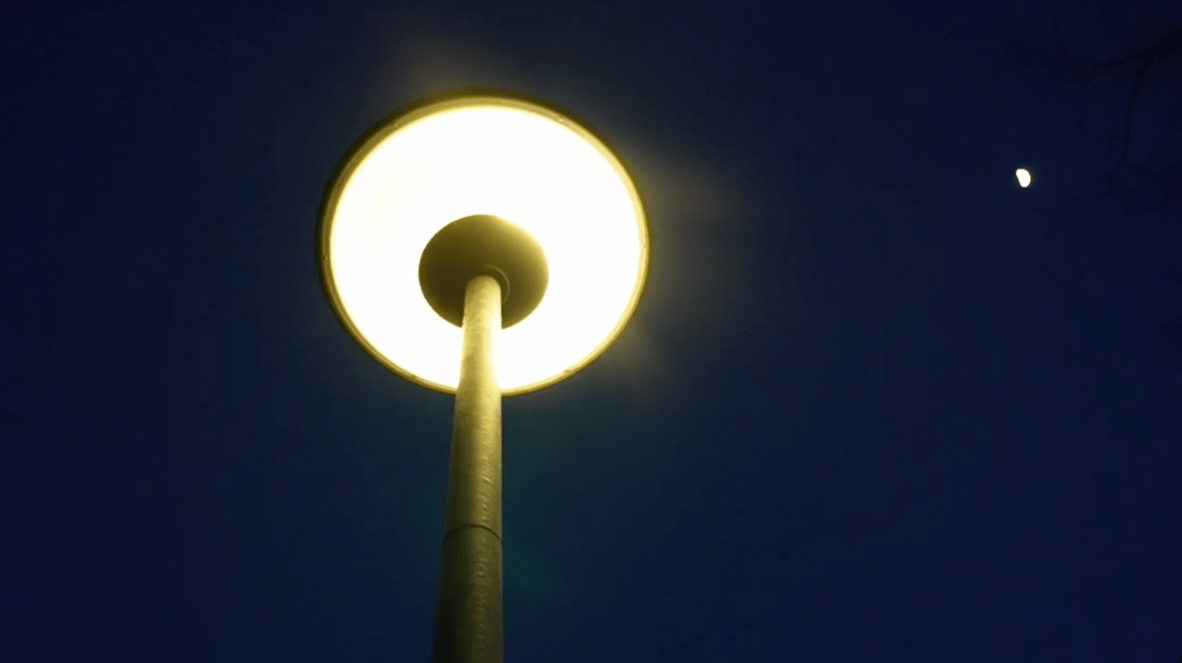
The Netherlands is one of the most illuminated countries in the world. At any point in the night, more than three and a half million streetlights are burning bright, enabling us to get home from work, exercise, and meet up with friends. All in the safety of artificial light. But if you walk through the city at night, you might notice that something is changing with how we light our cities. From white, yellow and orange to green and blue. Why are there so many different colours of street lights?
In this science video, presenter Nick goes on a journey through the city of Groningen to understand why the colours of our streetlights are changing, and what this has to do with the wildlife we share our cities with.
Nick visits two experts in their work environment:
- Professor Roelof Hut, chronobiologist at the Rijksuniversiteit Groningen, shows us around his lab and explains how different animals perceive different colour waves of light.
- Margriet van der Zwan-Krijn, ecologist working at the Municipality of Groningen, takes us along several locations near Ring Zuid where different measures, like a ‘dark highway for bats’, help reduce the negative impact of artificial streetlight on wildlife.
Science video made by: Nick Wilson (presenter), Myrna Kooij (director), Elizabeth van der Zeijden-Los (co-director & audio) and Marit Nygard (video & editing).
This science video was made for the course Science and the Public, given by Lemke Kraan with guest lectures from Thijs Brandsma and Karin Schagen.

